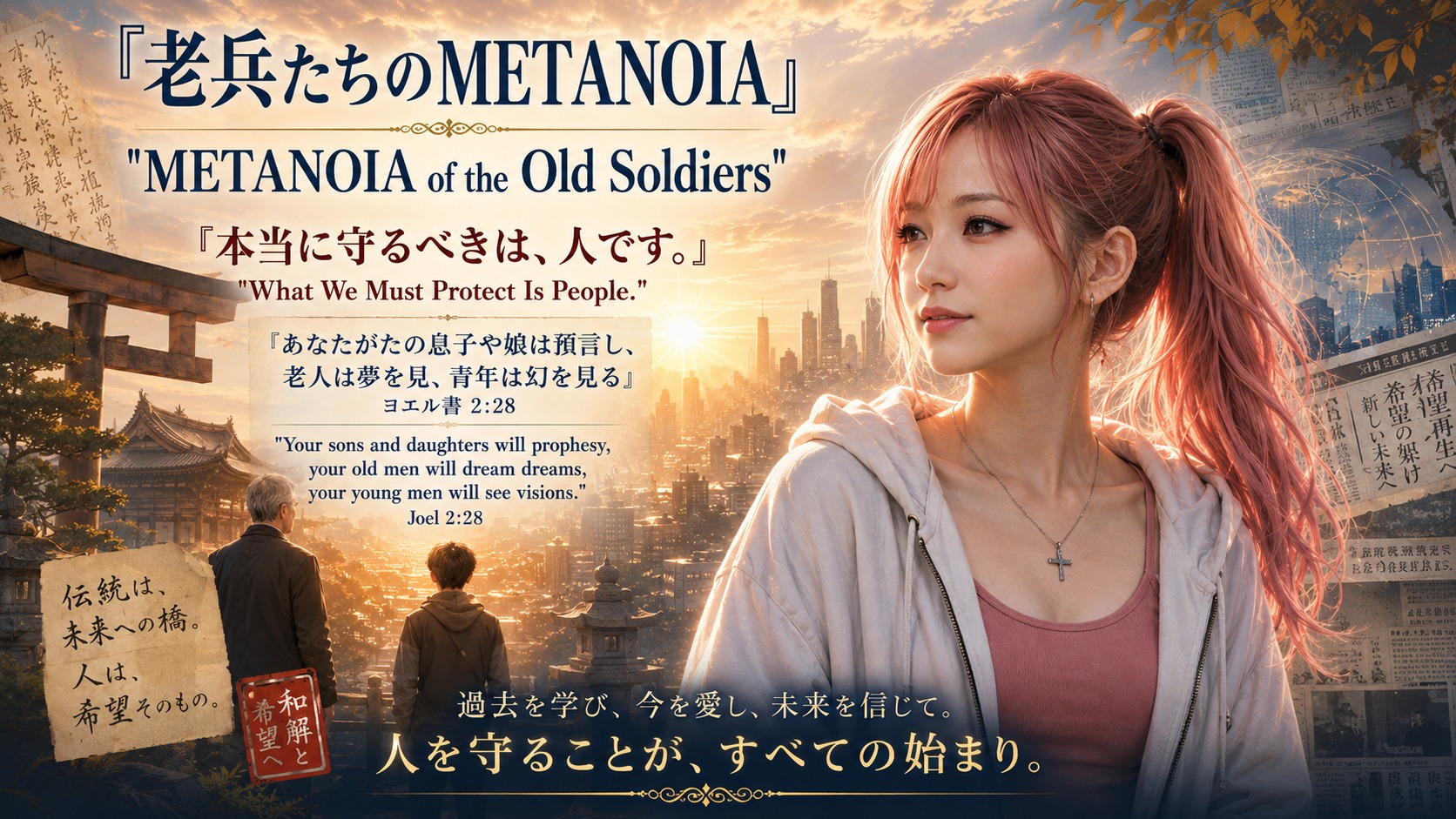
『老兵たちのMETANOIA / METANOIA of the Old Soldiers』 English below👇️
皆様、おはようございます☀ はらぺこ僧侶です🤗
最近ニュースを見ていると、 ナフサ、米中外交、中東情勢、移民問題…
なんというか、世界中が 「あちら側」と「こちら側」 に分かれていくように見える時があります。
ナフサって、普段の会話ではあまり言わないですよね。 「今日ナフサ足りてる?」 とか、言わないですもんね😅
でも、それが原油や石油化学製品につながって、 プラスチックや包装、医療用品、物流、外食、生活用品にまで関わってくる。
遠い言葉のようで、実は生活のすぐ近くにある。
米中外交もそうです。
テレビの向こうで、大きな国の偉い人たちが話しているように見える。
でも、貿易、安全保障、台湾、中東、レアアース、エネルギー。
そういう言葉の先には…
働く人がいて 生活する人がいて 子どもたちがいて 明日のご飯を考える家庭があります。
中東のニュースもそう。
地図の向こうの話に見えるけれど…
そこには家があり 家族があり 祈りがあり そして… 眠れない夜があります。
あぁ…世界って本当に近いんだなぁ…って思います😌
でも、こういう時に怖いのは、 問題そのものだけじゃないんですよね。
すぐに、世界を対立で見てしまうこと👆️
政府が悪い。 海外が悪い。 移民が悪い。 あの国が悪い。 あの民族が悪い。 あの世代が悪い。
もちろん、現実の問題は…あります。
資源も、外交も、戦争も、移民も、 きれいごとでは済まない。
生活がかかっている。 命がかかっている。 文化も、治安も、仕事も、家族も関わって来るんです。
だから、不安になる… これは自然です。
怒り💢が出るのも自然。
でも、不安になると人は、 すぐに名前をつけたくなるんです。
「敵」 「よそ者」 「あいつら」 「分かってない人たち」
そう呼べると、少し楽なんです。
考えなくて済むから。
でも、それは遠い国だけの話じゃないんです。
日本にもあります。 沖縄にもあります。
本土と沖縄。 うちなーんちゅと、県外出身者。 昔から住んでいる人と、移住してきた人。
私のような県外出身者が、少し距離を置かれることもあります。
あぁ、私はここでは外から来た人なんだな… って感じることも多々…あります😢
でも逆もあります。
県外から来た人が、 沖縄の人をどこか見下してしまう空気。
「本土の方が進んでいる」 「沖縄は遅れている」 「ウチナータイム笑」
そういう目線👁️も、確かにあります。
これ、どちらか一方だけが悪い、で終わらない話なんですよね。
歴史がある。 痛みがある。 誤解がある。 生活がある。 そして… 守りたいものがあります。
でも… そこを見ずに、
「うちなーんちゅはこう」 「ないちゃーはこう」 「移民はこう」 「政府はこう」 「外国はこう」
と一言でまとめると、 人が見えなくなります。
今日は、ここははっきり言いたいです。
私は、歴史が好きです。 国家も、伝統も、大切すっごく大切💕
靖国神社にも、伊勢神宮にも、出雲大社にも行って、 その場所に積み重なった祈りや歴史を感じたいです。
守られてきたものには、ちゃんと敬意を持つ。 受け継がれてきたものを、軽く扱わない。
これは本当にそうです。
でも…
本当に守るべきものは、最後には『人』なんです。
国を守るのも、 伝統を守るのも、 文化を守るのも、 法律を守るのも、 本来は、人の命と暮らしを守るためです。
そこが逆になった瞬間… 大切なものを守っているつもりで、
『人を壊してしまうことがあります』
「国を守るため」 「伝統を守るため」 「秩序を守るため」 「法律だから」
その言葉自体は、とても大切です。
でも、その言葉を盾にして、 目の前の人を敵に見立てていないか。
そこは、ちゃんと見つめたいです。
イエスさんは、こう言いました。
『安息日は人のために設けられたのです。人が安息日のために造られたのではありません。』マルコの福音書 2:27
これ、ただ 「ちゃんと休みましょう」 というだけの言葉ではないんですよね。
もちろん、休むことは大切です。
でもこの場面でイエスさんが突いているのは、 もっと深い、深いところなんです🤗
安息日という大切な掟(法律・ルール)がある。 それは当然。
でも、その掟を守ることを理由に、 飢えている人を見捨てるのか。 苦しんでいる人を助けないのか。 困っている人の前を通り過ぎるのか。
それが本当に、人の道なのか。
そこを問いているんです。
ルールは大切。 法律も大切です。
国も、伝統も、歴史も、文化も、 軽く扱っていいものでは…無い。
でも、それらは人を守るためにあるのであって、 人を壊すためにあるのでは…無い。
法律は、違反を裁くことができます。
でも、法律を破った人の尊厳まで消し去っていいわけではない。
国境は、国の仕組みとして必要です。
でも、守るべき人の命に、 「ここから先は愛さなくていい」 という線を引くためのものではない。
伝統は、人の心を支えるものです。
でも、伝統を守るために、 今生きている人を踏みつけるなら、 それはもう伝統の顔をした暴力になってしまう。
だから私は思うんです。
歴史を愛するなら、その歴史の中で泣いた人のことも見たい。 国家を愛するなら、その国で今日を生きる人の命を見たい。 伝統を守るなら、その伝統が誰かを排除する道具になっていないかも見たい。
ここで出てくるのが、今日のテーマです。
『老兵たちのMETANOIA』
老兵って、年齢だけの話ではありません。
経験を持っている人。 過去の痛みを知っている人。 昔の危機を知っている人。 戦い方を覚えてしまった人。 疑うことで自分を守ってきた人。
そういう意味の、老兵です。
人は傷つくと、経験が鎧になります。
「昔はこうだった」 「あの時も裏切られた」 「だから信用しない」 「だから先に疑う」 「だから相手を敵として見る」
分かるんです。
経験って、大事です。
苦労してきた人の言葉には、重みがあります。
昔の危機を知っている人。 オイルショックを覚えている人。 物流の混乱を知っている人。 外交の怖さを知っている人。 基地の問題を、生活の中で背負ってきた人。 差別された記憶を持っている人。
そういう人たちの知恵は、本当に必要です。
でも…
経験が知恵ではなく、鎧になってしまう時があります。
守っているつもりで、 動けなくなる、過去を誇って重荷にしている。
間違えないために、 誰も信じられなくなる。
傷つかないために、 新しい出会いまで敵に見えてしまう。
あぁ…あるよねぇ…って思います。
私の中にもあります。
「これは危ない」 「この人はこういうタイプだ」 「前にもこういうことがあった」
そうやって、自分を守ろうとする。
でもそれが行きすぎると、 目の前の人を、今のその人として見られなくなるんですよね。
旧約聖書に、こんな言葉があります。
『あなたがたの息子や娘は預言し、老人は夢を見、青年は幻を見る』ヨエル書 2:28
これ、私はすごく好きです。
若者だけが未来を見るんじゃない。
老人も、夢を見るんです。
昔話だけじゃない。 武勇伝だけじゃない。 「あの頃は良かった」だけじゃない。
もう一度、未来を見る。
これ、すごく希望のある言葉だと思います。
老兵たちのMETANOIAって、 経験を捨てることじゃないんです。
傷をなかったことにすることでもない。
そうじゃなくて、 過去を知っているからこそ、 今、心の向きを変えること。
「昔はこうだった」 で止まらない。
「だから今は、どう愛するか」 まで行くこと。
ここなんです。
若い人にも危うさがあります。
勢いだけで突っ走ると、 昔の人が何度も落ちた穴に、また落ちることがあります。
「古い人は全部ダメ」 「経験なんていらない」 「新しい方が正しい」
それも、ちょっと危ない。
だから必要なのは、対立じゃないんですよね。
若者の幻と、老人の夢。
新しい感覚と、古い経験。
外から来た人の視点と、土地に根ざした人の記憶。
政府の判断と、生活者の不安。
外交の言葉と、現場の痛み。
それを切り離さずに、どうつなぎ直すか。
そこにMETANOIAがあります。
イエスさんは、こうも言いました。
『自分の敵を愛し、自分を迫害する者のために祈りなさい』マタイの福音書 5:44
これ、甘い言葉じゃないです。 クリスチャンですら黙り込む…そんな一言。
敵を愛するって… 相手の悪をなかったことにする意味ではありません。
被害を我慢しろ! という意味でもありません。 境界線を捨てろ! という話でもありません。
でも… 相手を「敵」という一語だけに閉じ込めた瞬間、 自分の心も、対立の中に閉じ込められてしまう。
そこが怖いところ。
確かに批判は必要です。
間違っていることには、「違う」と言わなきゃいけない。
でも、怒りだけで見ていると、人が見えなくなる。
その人の歴史が見えなくなる。 恐れが見えなくなる。 守りたいものが見えなくなる。 生活が見えなくなる。
国と国でも。 地域と地域でも。 沖縄と本土でも。 うちなーんちゅと県外出身者でも。 移民と地域住民でも。 世代と世代でも。
対立の言葉は、簡単です。
「あいつらが悪い」
これで終われる。
でも、愛はそこで終わらない。
「なぜ、そうなったんだろう」 「何を恐れているんだろう」 「何を守ろうとしているんだろう」 「こちらにも、見えていないものがあるんじゃないか」
そう問い直す。
これが心の向きを変えることです。 METANOIAです。
今日は、自分の中の老兵に聞いてみたいです。
「私は、昔の傷で今の人を見ていないかな」
「私は、経験を知恵ではなく、鎧にしていないかな」
「私は、誰かを敵というラベルだけで見ていないかな」
そして、自分の中の若者にも聞いてみたいです。
「私は、古い人の痛みを雑に切り捨てていないかな」
「私は、経験ある人の言葉を、ただ古いものとして笑っていないかな」
本当は、どちらも必要なんですよね。
夢を見る老人。 幻を見る若者。
過去を知る人。 未来を描く人。
土地に根ざした人。 外から来た人。
怖さを知っている人。 新しい道を探す人。
みんな同じテーブルにつけたらいいなと思います。
もちろん、簡単じゃない😅
歴史も、政治も、外交も、移民も、沖縄の問題も、 そんなに簡単に一つの言葉で解決できません。
でも、せめて今日、 誰かを雑に敵にする前に、 一呼吸だけ置きたいです。
ニュースを見る時も。 SNSを見る時も。 地域の話をする時も。 世代の話をする時も。
「あいつら」
で止まらない。
その奥にいる人を見る。
それだけでも、心の向きは少し変わる気がします。
老兵たちよ、もう一度夢を見よう。 若者たちよ、幻を見よう。
そして一緒に… 人を守る未来へ、少しずつ心の向きを変えていけますように。
God Bless You💫
“METANOIA of the Old Soldiers”
Good morning everyone ☀ Harapeko Soryo here 🤗
Recently, when I look at the news, I see words like naphtha, U.S.-China diplomacy, the Middle East, and immigration.
Somehow, it feels like the world is being divided again and again into “our side” and “their side.”
Naphtha is not exactly a word we use every day.
We do not usually say,
“Do we have enough naphtha today?”
But it connects to crude oil, petrochemicals, plastics, packaging, medical supplies, logistics, food service, and everyday products.
So even if the word sounds far away, it is actually close to our daily lives.
U.S.-China diplomacy may look like something happening far away between important people on television.
But trade, security, Taiwan, the Middle East, rare earths, and energy…
behind those words, there are workers, families, children, and people thinking about tomorrow’s meals.
The same is true of the Middle East.
It may look like a story beyond the map, but there are homes there.
Families. Prayers. Sleepless nights.
Ah… the world is much closer than it looks.
But what scares me in moments like this is not only the problem itself.
It is how quickly we begin to see the world through conflict.
The government is bad. Foreign countries are bad. Immigrants are bad. That country is bad. That people are bad. That generation is bad.
Of course, real problems exist.
Resources, diplomacy, war, and immigration cannot be handled only with pretty words.
Lives are involved. Daily life is involved. Culture, safety, work, and family are involved.
So fear is natural.
Anger is natural too.
But when we become afraid, we quickly want to name someone.
“Enemy.” “Outsider.” “Those people.” “People who do not understand.”
When we can call someone that, it becomes easier for a moment.
Because we do not have to think deeply.
But this is not only about distant countries.
It exists in Japan too. It exists in Okinawa too.
Mainland Japan and Okinawa. Uchinaanchu and people from outside the prefecture. People who have lived there for generations, and people who moved there later.
As someone from outside Okinawa, I sometimes feel a little distance.
Sometimes I feel,
“Ah, I am someone who came from outside.”
But the opposite also exists.
People who come from outside can sometimes look down on Okinawan people.
“The mainland is more advanced.” “Okinawa is behind.” “So we should teach them.”
That kind of attitude exists too.
This is not something we can solve by saying only one side is wrong.
There is history. There is pain. There is misunderstanding. There is daily life. There are things people are trying to protect.
But if we ignore all of that and simply say,
“Uchinaanchu are like this.” “Naichaa are like this.” “Immigrants are like this.” “The government is like this.” “Foreign countries are like this.”
then we stop seeing people.
So today, I want to say this clearly.
I love history.
I believe nations and traditions matter.
I want to visit Yasukuni Shrine, Ise Jingu, and Izumo Taisha, and feel the prayers and history that have accumulated in those places.
I want to respect what has been protected.
I do not want to treat inherited tradition lightly.
I truly mean that.
But.
What we must protect, in the end, is people.
We protect nations, traditions, culture, and laws so that human lives and daily living may be protected.
The moment that order is reversed, we may think we are protecting something precious while destroying people.
“To protect the nation.” “To protect tradition.” “To protect order.” “Because it is the law.”
Those words are important.
But I want to ask:
Are we using those words as a shield while turning the person in front of us into an enemy?
Jesus said:
“The Sabbath was made for man, and not man for the Sabbath.” Mark 2:27
This does not only mean,
“Please rest properly.”
Of course, rest matters.
But in that moment, Jesus was pointing to something deeper.
There is an important commandment called the Sabbath.
Yes, that matters.
But should we use that rule as a reason to ignore the hungry, to avoid helping the suffering, or to pass by someone in need?
Is that truly the way of humanity?
Rules matter.
Laws matter.
Nations, traditions, history, and culture should not be treated lightly.
But they exist to protect people, not to destroy them.
The law can judge a violation.
But that does not mean we may erase the dignity of the person who broke it.
Borders may be necessary as systems of nations.
But they are not lines that say,
“Beyond this point, you no longer have to love.”
Tradition can support the human heart.
But if we trample living people in order to protect tradition, then tradition itself begins to wear the face of violence.
So I think this:
If we love history, we must also see the people who cried inside that history.
If we love a nation, we must see the lives of the people living in that nation today.
If we protect tradition, we must also ask whether that tradition has become a tool for excluding someone.
And that is where today’s theme begins.
METANOIA of the old soldiers.
By “old soldiers,” I do not only mean age.
I mean people who carry experience. People who know past wounds. People who have lived through old crises. People who learned how to fight. People who protected themselves by doubting.
In that sense, we all may have an old soldier inside us.
When people are wounded, experience can become armor.
“It was like this before.” “I was betrayed then.” “So I will not trust.” “So I will doubt first.” “So I will see the other person as an enemy.”
I understand that.
Experience matters.
The words of people who have suffered carry weight.
People who remember old crises. People who remember oil shocks. People who know logistical confusion. People who understand the fear of diplomacy. People who have carried the issue of military bases in daily life. People who remember being discriminated against.
That wisdom is truly needed.
But sometimes…
experience stops being wisdom and becomes armor.
It seems to protect us, but it can keep us from moving.
To avoid making mistakes, we become unable to trust anyone.
To avoid being hurt, even new encounters begin to look like enemies.
Ah… I know that feeling.
I have that inside me too.
“This is dangerous.” “This person is that kind of person.” “This happened before.”
We try to protect ourselves like that.
But if it goes too far, we can no longer see the person in front of us as they are now.
The Old Testament says:
“Your sons and daughters will prophesy, your old men will dream dreams, your young men will see visions.” Joel 2:28
I really like this verse.
It is not only the young who see the future.
The old also dream dreams.
Not only old stories. Not only heroic memories. Not only, “Back in my day.”
To see the future again.
That is a word full of hope.
The METANOIA of old soldiers is not throwing away experience.
It is not pretending the wounds never happened.
It is this:
Because we know the past, we turn the direction of our hearts toward the present.
Not stopping at,
“It used to be this way.”
But moving toward,
“So now, how do we love?”
That is the point.
The young also have their dangers.
If we run only with speed and energy, we may fall into the same holes that others have fallen into before.
“Old people are all wrong.” “Experience does not matter.” “New is always right.”
That is also dangerous.
So what we need is not opposition.
Young visions and old dreams.
New sensitivity and old experience.
The perspective of those who came from outside, and the memory of those rooted in the land.
Government decisions and daily anxieties.
Diplomatic words and pain on the ground.
How do we reconnect them without tearing them apart?
Maybe that is where METANOIA is.
Jesus also said:
“Love your enemies and pray for those who persecute you.” Matthew 5:44
This is not a sweet or easy word.
Loving the enemy does not mean pretending evil did not happen.
It does not mean enduring harm in silence.
It does not mean throwing away boundaries.
But when we lock someone inside the single word “enemy,” our own hearts become locked inside conflict too.
That is the scary part.
Criticism is necessary.
When something is wrong, we need to say,
“That is wrong.”
But when we see only through anger, we stop seeing people.
We stop seeing their history. Their fear. What they are trying to protect. Their daily life.
Between nations. Between regions. Between Okinawa and the mainland. Between Uchinaanchu and people from outside. Between immigrants and local residents. Between generations.
Words of conflict are easy.
“They are the problem.”
We can stop there.
But love does not stop there.
It asks again:
“Why did it become this way?” “What are they afraid of?” “What are they trying to protect?” “Is there something I am not seeing?”
That is changing the direction of the heart.
That is METANOIA.
Today, I want to ask the old soldier inside me:
Am I seeing today’s people through old wounds?
Am I turning experience into armor instead of wisdom?
Am I seeing someone only through the label of enemy?
And I also want to ask the young person inside me:
Am I cutting off the pain of older people too easily?
Am I laughing at experienced voices just because they sound old?
The truth is, we need both.
Old people who dream dreams. Young people who see visions.
People who know the past. People who imagine the future.
People rooted in the land. People who came from outside.
People who know fear. People who search for a new path.
I hope we can sit at the same table.
Of course, it is not easy.
History, politics, diplomacy, immigration, and Okinawa’s problems cannot be solved with one simple phrase.
But at least today, before we casually make someone an enemy, may we pause for one breath.
When we watch the news. When we read social media. When we talk about our region. When we talk about generations.
Let us not stop at,
“Those people.”
Let us look for the person behind the label.
Even that may change the direction of the heart a little.
Old soldiers, dream again.
Young people, see visions.
And together, may we turn our hearts little by little toward a future that protects people.
God Bless You💫
#朝のメッセージ #METANOIA #老兵たちのMETANOIA #ヨエル書 #はらぺこ僧侶